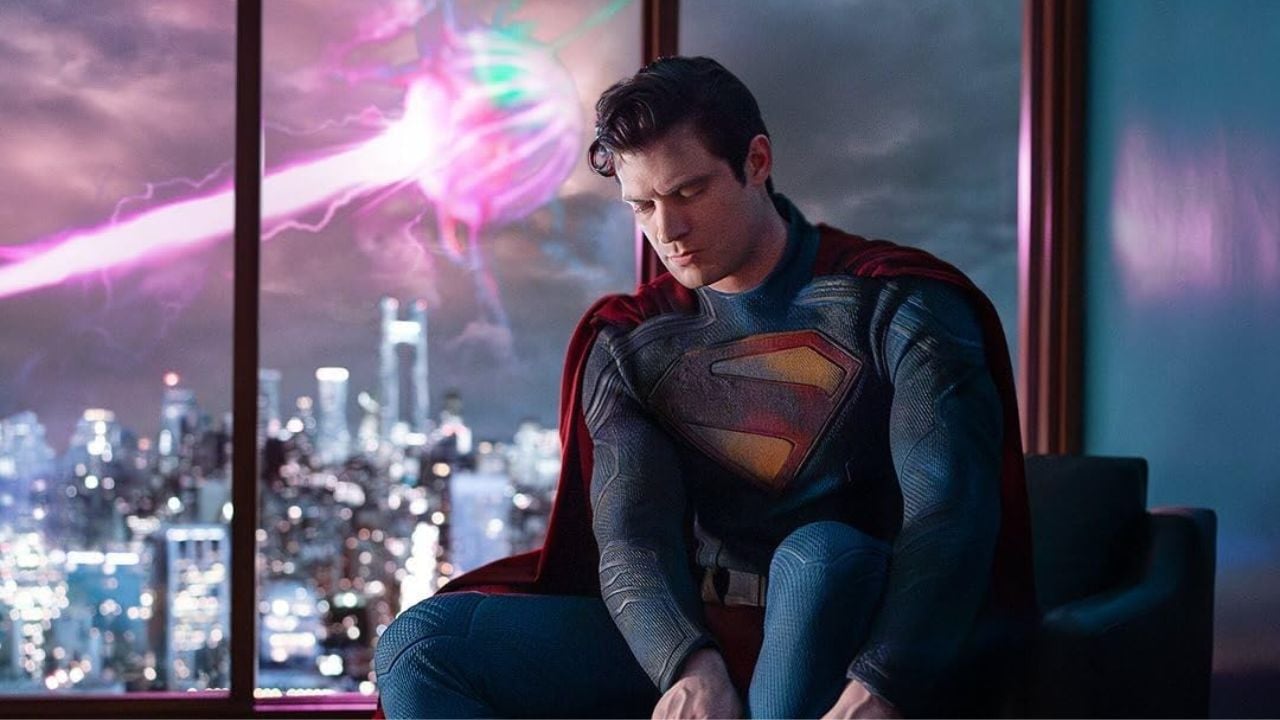
If you just watched Superman (2025) and wisely stayed through the credits, you know the real excitement begins there. James Gunn’s post-credits scenes aren’t just fun extras—they’re the secret sauce that spices up the DC Universe, teasing future twists that will keep fans buzzing.
These scenes are crucial storytelling moments, dropping hints about what’s next for Clark Kent, his allies, and his foes. Whether you’re a longtime fan or a casual viewer, they set the stage for the next big chapters in the DC saga.
In this guide, we’ll break down what happens after the credits, why it matters, and how these scenes are about to reshape the DC Universe in ways you won’t want to miss.
How Many Post-Credits Scenes Are in James Gunn’s Superman?
Superman (2025) features two distinct post-credits scenes: one mid-credits scene and one final stinger after all the credits have rolled. Both scenes serve different purposes but are equally important for fans who want to understand the bigger picture of the DC Universe’s future.
What Happens in the Mid-Credits Scene?

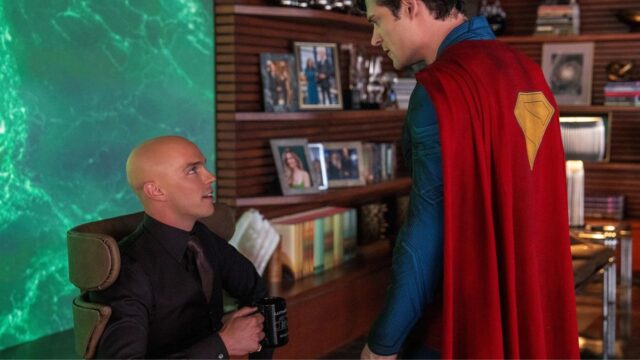
The mid-credits scene picks up shortly after the main events of the movie. Lex Luthor, played by Nicholas Hoult, is locked away in a high-security prison. Despite his incarceration, Luthor’s signature smirk hints that he’s far from defeated.
Suddenly, the scene takes a sharp turn when Amanda Waller, portrayed by Viola Davis, appears. Known as the ruthless head of A.R.G.U.S. and the Suicide Squad, Waller offers Luthor a deal: his freedom in exchange for his cooperation on a secretive project involving metahumans.
This scene is loaded with significance. It signals that Luthor’s machinations are far from over and that the government is willing to leverage even the most dangerous individuals to combat looming threats.
The alliance between Waller and Luthor sets up potential storylines involving covert operations, morally ambiguous missions, and possibly a new iteration of the Suicide Squad or Injustice League.
What Is Revealed in the Final Post-Credits Scene?

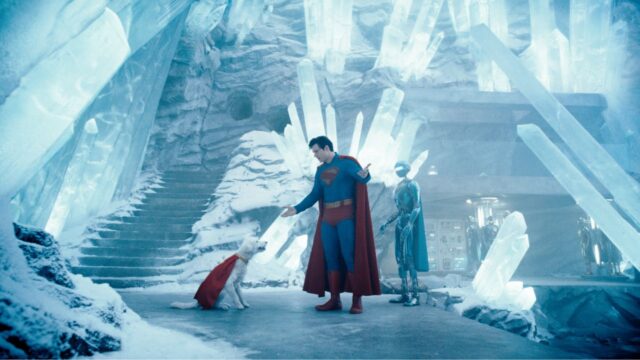
After the credits finish, the screen fades back in on the icy, crystalline Fortress of Solitude. Superman (David Corenswet) is seen standing before a glowing console, deep in thought. Suddenly, a shimmering portal opens, and through it steps Kara Zor-El—Supergirl—played by Milly Alcock.
This brief but emotional encounter reveals that Kara has been watching Earth from afar and has now decided to make contact with her cousin. She warns Clark of an impending cosmic threat that will require the combined strength of Kryptonians to face.
This scene is a clear teaser for Supergirl’s future role in the DC Universe and hints at grander, cosmic-scale conflicts on the horizon.
Why Are These Superman Post-Credits Scenes So Important?

The post-credits scenes in Superman (2025) do more than just tease—they actively build the foundation for the new DC Universe that James Gunn is crafting.
By introducing Amanda Waller’s involvement with Lex Luthor, the film hints at a darker, more complex world where heroes and villains might have to work together under uneasy alliances.
Meanwhile, Supergirl’s arrival opens the door to exploring Kryptonian lore and cosmic threats, expanding the scope of the story beyond Earth. These scenes promise interconnected stories, new characters, and larger-than-life conflicts that will unfold in sequels and spin-offs.
What Easter Eggs and Hidden Details Can Fans Spot in the Post-Credits Scenes?

If you blinked, you might have missed some of the sly nods cleverly tucked into these post-credits scenes. LexCorp logos scattered throughout the prison are a subtle reminder that Lex Luthor’s influence stretches far beyond his cell, reaching into every corner of Metropolis and beyond.
Amanda Waller’s dossier, glimpsed just long enough for eagle-eyed fans to spot names like Slade Wilson and Pamela Isley, offers a cheeky wink to those hoping to see Deathstroke and Poison Ivy join the cinematic fray.
Meanwhile, the Kryptonian glyphs etched into the Fortress of Solitude are the DC Universe’s version of “Here be dragons,” hinting at the arrival of more Kryptonian characters or villains down the line. And suppose you caught the phrase “Phantom Zone breach” flashing on Superman’s console.
In that case, you know that classic adversaries like General Zod might not be gone for good, because what’s a Superman story without the threat of an interdimensional prison break?
How Do Superman’s Post-Credits Scenes Compare to Other DC Movies?
In the past, DC post-credits scenes have sometimes felt disconnected or purely promotional. However, Superman (2025) changes that trend by integrating its post-credits scenes tightly into the narrative and the broader DC Universe.
They feel purposeful, teasing future plotlines and character arcs in a way that builds excitement rather than confusion.
Fans and critics alike praise these scenes for their clarity, impact, and the way they set up the next phase of DC storytelling, much like the post-credits scenes in the Marvel Cinematic Universe, but with a unique DC twist—more mythic and mysterious.
What Do These Scenes Suggest About Future Superman Movies and Spin-Offs?

The mid-credits and post-credits scenes point toward a sequel and several spin-offs:
- Superman Sequel: With Lex Luthor now working with Amanda Waller and Supergirl entering the scene, a follow-up film seems inevitable. The sequel will likely explore the fallout of Luthor’s new alliances and the cosmic threat Kara hinted at.
- Supergirl Solo Movie: Kara Zor-El’s introduction is a strong setup for her film or a team-up movie with Superman.
- Potential Team-Ups: The involvement of A.R.G.U.S. and hints at characters like Deathstroke and Poison Ivy suggest possible crossovers with the Suicide Squad or Justice League.
- Cosmic Storylines: The references to the Phantom Zone and Kryptonian symbols hint at larger cosmic threats like Brainiac or Darkseid, promising grander scale conflicts.
What Are Fans Speculating About the Superman Post-Credits Scenes?

The fan community is abuzz with theories. Many speculate that the “cosmic threat” Supergirl mentions could be Brainiac, a classic Superman villain known for his intelligence and destructive tendencies. Others think it could be Darkseid or Mongul, villains who have appeared in DC comics as universe-level threats.
There’s also excitement about the potential for a Justice League reboot or a new team lineup, with characters like Green Lantern, Hawkgirl, and Mr. Terrific already introduced in the main film. Fans are eager to see how these characters will interact and what new dynamics will emerge.
Why You Should Always Stay for Superman’s Post-Credits Scenes?
If you’re a fan of superhero movies—or just great storytelling in general—never skip the post-credits scenes in Superman (2025). They contain vital information, character introductions, and hints about the future that enrich the movie experience and reward your patience.
Missing these scenes means missing out on the next big developments in the DC Universe, from new heroes and villains to epic story arcs that will shape the future of superhero cinema.
Final Thoughts: What Superman’s Post-Credits Scenes Mean for the DC Universe

James Gunn’s Superman is more than a standalone film—it’s the cornerstone of a new, interconnected DC Universe. The post-credits scenes are carefully crafted to tease and excite, promising that this is just the beginning of a thrilling journey.
With Lex Luthor’s uneasy alliance with Amanda Waller and Supergirl’s arrival warning of cosmic dangers, the future looks packed with epic battles, complex characters, and stories that will keep fans on the edge of their seats.
So next time you watch a DC movie, remember: the real story often begins after the credits roll.
About Superman
Superman is a 2025 American superhero film based on the eponymous character from DC Comics. Written and directed by James Gunn, it is the first film in the DC Universe (DCU) produced by DC Studios and the second reboot of the Superman film series. David Corenswet stars as Clark Kent / Superman, alongside Rachel Brosnahan, Nicholas Hoult, Edi Gathegi, Anthony Carrigan, Nathan Fillion, and Isabela Merced. In the film, Superman must prove to the world that he is their protector after billionaire Lex Luthor conducts a plan to turn public opinion against him.
Development on a sequel to the DC Extended Universe (DCEU) film Man of Steel (2013) began by October 2014, with Henry Cavill set to reprise his role as Superman.
Plans changed after the troubled production of Justice League (2017) and the Man of Steel sequel was no longer moving forward by May 2020. Gunn began work on a new Superman film around August 2022.
In October, he became co-CEO of DC Studios with producer Peter Safran and they began work on a new DC Universe. Gunn was revealed to be writing the film in December. The title Superman: Legacy was announced the next month, Gunn was confirmed to be directing in March 2023, and Corenswet and Brosnahan were cast that June.
The subtitle was dropped by the end of February 2024, when filming began in Svalbard, Norway. Production primarily took place at Trilith Studios in Atlanta, Georgia, with location filming around Georgia and Ohio. Filming wrapped in July. The film takes inspiration from the comic book All-Star Superman (2005–2008) by Grant Morrison and Frank Quitely, among others.





No Comments on Superman Post-Credits Scenes Explained: What Happens After the Credits Roll in Superman 2025?