In Dune: Awakening, the sands of Arrakis are harsh and unforgiving, but that doesn’t mean you can’t carve out a place to call home. Building a base provides shelter from extreme heat, sandstorms, and sandworms, while also offering a safe space to refine materials and purify water.
However, unlike traditional survival games, bases in Dune: Awakening are semi-disposable. Below, we’ve compiled an easy guide to help you learn how to build bases in Dune: Awakening.
1. Dune: Awakening Base Building Guide

Whether you’re building a sprawling stronghold or multiple outposts, understanding how to manage your bases is crucial to survival in the world of Dune: Awakening. As you progress, you’ll unlock the ability to build larger and better-positioned bases across the desert.
You can build up to three bases in Dune: Awakening: two sub-fiefs and one advanced fief. The game allows flexible management of your bases through features like abandoning and reclaiming bases, using blueprints for quick reconstruction, and co-op building systems.
These mechanics let players strategically relocate and use multiple outposts while staying within the base limit. So, grab your papers and pencils, and let’s get started on this base-building guide!
i. Getting Started: Basic Building Tools
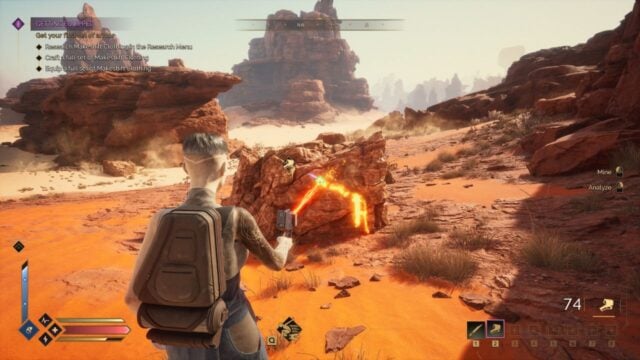
Like many survival-crafting games, Dune: Awakening has a flexible building system, but mastering it requires understanding a few key mechanics.
Step 1: Equip the Construction Tool
- Once you have your Construction Tool, you can start placing structures.
- You can build in two ways:
- Immediate Placement – place pieces directly.
- 3D Blueprint Mode – preview and plan before committing.
- Use Blueprint Mode to visualize complex builds before committing resources.
Step 2: Place Your Sub-Fief Console First
- Acts as your land claim block—defines your buildable area.
- Only the initial placement determines your build zone.
- After placing, the console can be freely moved.
- The Advanced Sub-Fief Console upgrade offers a larger claim radius.
Step 3: Learn the Tool’s Modes
Press RMB/R3 to cycle through the following modes:
- Move – relocate structures.
- Repair – fix damaged parts.
- Demolish – dismantle pieces.
- Piece Picker – select and copy existing pieces for easy duplication.
Keep in mind that structural integrity matters in this game, so use support beams and walls to hold structures up.
ii. A New Home: Furnishing Your Base

Basic outposts only require resources like Granite Stone and Salvaged Metal, making it easy to deploy a quick camp almost anywhere on Arrakis. You can use co-op building and blueprints to make large-scale projects easier.
Step 4: Place Interior Components
- Press Change Set on your Construction Tool to open building categories:
- Crafting Stations (e.g., Fabricators, Refineries)
- Storage Units
- Decorations and Furniture
- Select items and place them like standard building pieces.
Step 5: Use the Circuit System for Efficient Crafting
- Crafting stations pull materials from storage units on the same Circuit.
- Example Setup:
- Fabricator A (Circuit 1): Linked to Iron-only storage.
- Fabricator B (Circuit 2): Linked to general resource storage.
- Set the Input/Output Circuits in each station’s Manage Tab.
Step 6: Manage Power Supply
- Use Fuel-Powered Generators early on to supply electricity.
- Each generator outputs 75 power.
- Every crafting station consumes a portion of that power.
- Note that overloaded grids shut down base systems, including shields.
Plan your base layout around power flow and resource logistics and regularly check structural integrity to avoid collapses.
iii. Final Steps: Moving and Safety

Your base in Dune: Awakening is your lifeline in the sands of Arrakis. Focus on smart placement, minimal but functional design, and adaptability. Don’t waste resources on large bases unless you’re setting up a long-term hub.
Step 7: Save and Relocate Using Blueprints
- Craft a Solido Replicator in a Fabricator to save your base layout.
- Blueprints can be placed elsewhere but must be rebuilt manually.
- Crafting stations are not included in blueprints.
- Use your Sandbike with the Inventory Module to transport dismantled materials for easy rebuilding.
Step 8: Set Player Access Permissions
- Access the Permissions Tab via your Sub-Fief Console.
- Set who can interact with your:
- Doors
- Crafting Stations
- Storage Containers
- You can also adjust access on individual objects through their General Settings menu.
Vehicles degrade when left exposed to the elements. Build a simple garage using a floor and a few walls. As long as the game labels the area as “sheltered,” your sandbike will be protected, even if it’s not fully enclosed. Later on, research the Vehicle Backup Tool to store it more securely.
2. Dune: Awakening Best Base Locations

When choosing a base location, always prioritize access to key resources.
Shipwrecks and Imperial Testing Stations are excellent sources of rare crafting materials. Staying near ore deposits ensures a constant flow of metals required for gear upgrades.
Dew Flower Fields are another good choice as they provide hydration resources for survival. With the Dew Reaper tool, players can harvest water at dawn and store it in Literjons, making proximity to these fields a major advantage.
In terms of building strategy, build compact bases with only the essentials—crafting stations like the Blood Purifier and Ore Refinery. Mobility is key, and as you unlock more through research, establish small outposts in remote areas too far to travel from your main base.
Best Early Game Location: Hagga Basin South
Reasons to choose this location:
- Proximity to Tradepost ensures easy access to essential supplies early in the game.
- Rocky terrain helps defend against sandworm attacks.
- Great for gathering beginner-friendly materials, and many early quests can be completed quickly from this area.
- Nearby resources:
- Moisture-sealed caves
- A shipwreck
- Imperial Testing Station
- Best used as a launchpad before moving to a more strategic location.
Best Overall Location: Jabal Eifrit Al-Janub
Reasons to choose this location:
- Unlocks after progressing through early story quests and reaching Vermillius Gap. Convenient location just south of a Tradepost.
- Offers both safety and efficiency for long-term development.
- Abundant in Carbon Ore and various metal deposits for crafting and upgrades.
- Nearby resources:
- Shipwreck
- Imperial Testing Station
- Moisture-sealed caves
- Rare Fremen supplies
- Ideal for establishing a main base to support extended gameplay.
With the right setup, you’ll always have shelter, water, and resources—no matter where the winds of the desert take you.
We hope these steps help you to create a strong, sustainable base that supports both your survival and progression in Dune: Awakening.
3. About Dune: Awakening
Dune: Awakening is an open-world survival MMO developed by Funcom in collaboration with NUKKLEAR. Set in an alternate version of the Dune universe where Paul Atreides was never born, the game takes place on the harsh desert planet of Arrakis.
The game features base-building, PvP and PvE combat, resource management, and dynamic world events like sandstorms and Coriolis storms that reshape the landscape. Players can align with factions, upgrade gear, and explore the vast open world using vehicles and survival tools.
Dune: Awakening officially released on June 10, 2025, with early access starting June 5 for Deluxe and Ultimate Edition owners. It launches first on PC, with console versions for PlayStation 5 and Xbox Series X/S planned for later.







No Comments on How Many Bases is Too Many Bases in Dune: Awakening? Complete Base Building Guide